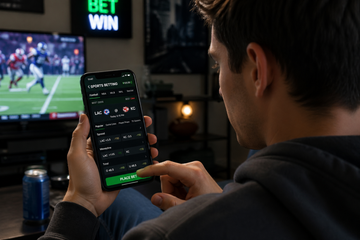
With a payment gateway for supplements, your store can accept Visa and Mastercard for vitamins, protein, sports nutrition and other nutraceuticals, run subscriptions that bill on a fixed schedule, and settle sales in your customers' currencies. Most supplement brands earn their margin on repeat orders, so steady card processing is worth more than a low headline rate.
Approval takes more preparation than general retail. Acquirers have seen free trial schemes, health claims that regulators pursue and products with hidden drugs, so they read your labels, ingredients, ads and checkout first. Visa classes negative option subscriptions as high integrity risk, and some processors refuse nutraceuticals that make harmful claims.
This is the part we handle for you. You complete Binderr Chooses, our short intake form, and we choose a regulated partner that takes supplements. We then build the file it will review, from certificates of analysis to your subscription terms, and handle the application with you. Most brands go live on card payments within 5 to 7 business days.

High Risk Payment Gateway and Merchant Account
Binderr Chooses
Time to onboard
5 to 7 days
Currencies
USD, EUR, GBP and more
Industries
Gambling, Adult, CBD, Crypto, Travel, Forex and more
What Is a Payment Gateway for Supplements?
A payment gateway for supplements carries each card payment from your checkout to an acquirer that has approved your brand to sell dietary supplements and nutraceuticals. The customer's bank approves or declines the payment in seconds, your store shows the result, and approved sales settle into your merchant account before the money reaches your business bank account. For the general mechanics, see how a payment gateway works. In this sector the software is rarely the problem. The approval sits with the acquirer, and it covers your products, your claims and the way you bill, not only your company.
Why Acquirers Treat Nutraceuticals as High Risk
Plain vitamins are low risk on their own. The category is rated high risk because of how part of it has sold. For years, some brands ran free trial offers, a bottle for the price of shipping that turned into a monthly charge most buyers did not expect, and dispute rates followed. Others sold weight loss, sexual enhancement and bodybuilding products that turned out to contain undeclared drugs, and the FDA names these as the categories most often tainted. Claims add a third risk. A product page that says a capsule treats a disease turns it into an unapproved drug in the US, and that kind of claim is not allowed on food supplements in the UK or the EU either. When any of this goes wrong, the acquirer carries the disputes, the fines and the damage with the card schemes. So it prices the whole category for its worst sellers, and a clean brand still has to show that it is clean.
Supplements Payment Gateway vs Mainstream Processors
Stripe's list of prohibited businesses, last updated on 22 September 2026, includes pseudo-pharmaceuticals or nutraceuticals that are not safe or make harmful claims. It separately bans negative option marketing and reduced price trials with unclear or hidden pricing. PayPal's US acceptable use policy does not name supplements, but it bars steroids, products that present a risk to consumer safety and products that government agencies have identified as likely to be fraudulent. A store selling plain vitamins at clear prices can often start on either. The trouble usually comes later, when a dispute spike, a flagged ingredient or an affiliate ad triggers a review, and the account is closed with the balance held.
A supplements payment gateway on a specialist acquirer works the other way round. Your products, labels, claims and billing terms are reviewed before the first sale, so the approval already covers what you sell when volume grows. Both processors' wider positions on high risk sellers are compared in do Stripe and PayPal allow high risk merchants, and the underwriting model itself is set out in how high risk payment processing works.
Where Supplements End and Other Categories Begin
Acquirers draw the line product by product, so be exact about which side you are on. Vitamins, minerals, protein, sports nutrition, herbal and botanical products sold with structure or function wording are supplements. CBD is not a supplement for this purpose. The FDA does not allow it in dietary supplements, and acquirers underwrite it separately, as covered in our guide to getting approved for a CBD payment gateway. Prescription medicines, including GLP-1 weight loss programmes, belong with payment gateways for online pharmacies and telehealth. Research peptides are their own category, explained in high risk payment processors for peptides.
Some products sold as supplements are not supplements at all. The FDA says SARMs cannot be legally marketed in the US as dietary supplements, that DMAA is not a dietary ingredient and products containing it are illegal, and that tianeptine does not meet the legal definition of a dietary ingredient. Acquirers decline these whatever the label says.
Set Up a Payment Gateway for Supplements
We place your supplement brand with a regulated partner that underwrites nutraceuticals and build the file it reviews.
- One form to start: Binderr Chooses reads your catalogue and picks the partner.
- Approved for what you sell: products, claims and billing reviewed before launch.
- Ingredient check: we flag anything acquirers or the FDA rule out.
- Labels and claims reviewed: disease wording removed before an underwriter sees it.
- Trial terms fixed: disclosures, reminders and cancellation set to card rules.
- USD, EUR and GBP settlement: sell in more than one currency from day one.
- Running in a week: most brands take card payments within 5 to 7 business days.
How to Get a Nutraceutical Payment Gateway Approved
A nutraceutical payment gateway is approved on four things: what is in the product, what the label and website say about it, how you bill, and who stands behind the company. The underwriter checks each one against the card scheme rules and the law in every market you ship to. A file that answers all four on the first submission is the fastest route to a yes.
Your Product List and Ingredients
Expect to send a full product list with every SKU, its complete ingredient list and the dose per serving. Underwriters look for ingredients that end an application on sight and for product types that attract hidden drugs. The FDA's Health Fraud Product Database lists products found to contain undeclared drugs such as sildenafil, tadalafil and sibutramine, and the FDA says the list covers only a small fraction of the potentially hazardous products on sale. Weight loss, sexual enhancement and bodybuilding products get the closest read for that reason.
Visa's core rules also make the acquirer stop card payments for any product that claims or implies an effect like a prescription drug, a controlled substance or a street drug, legal or not. A pill sold as a natural alternative to a prescription medicine, or as a legal steroid, fails that test before anyone reads the ingredients. If a product uses an ingredient that was not sold in the US before 15 October 1994, the FDA generally expects a new dietary ingredient notification at least 75 days before it goes on sale, and an underwriter may ask to see it.
Labels, Certificates and Manufacturing Standards
Send the label for every product. Underwriters compare it with the product page, the ingredient list and the certificate of analysis, and any mismatch stalls the file. In the US that means a Supplement Facts panel and, next to any structure or function claim, the FDA disclaimer. For each product, have the current batch tested by an independent lab and keep the certificate of analysis, which should show identity, potency and tests for contaminants such as heavy metals and microbes.
Acquirers also ask who makes the product. US manufacturers must follow the good manufacturing practice rules for dietary supplements in 21 CFR Part 111, so a recent third-party GMP audit certificate from your manufacturer, or your white label contract with one, answers the question. A brand that sources from an unnamed supplier abroad will be asked for more.
Your Website, Ads and Affiliate Pages
Underwriters go through every page of your site, then follow your ads and affiliate links to see what a customer actually sees. Acquirers do this because of cases like Tarr, Inc. In November 2017 the FTC settled with its operators, who sold more than 40 weight loss, muscle building and wrinkle reduction products through risk free trials: USD 4.95 for shipping, then about USD 87 every month. They built decoy websites with prominent disclosures and shared those with banks and processors when they applied for merchant accounts, while most consumers saw versions with weak or no disclosures. The court order imposed a USD 179 million judgment, suspended after about USD 6.4 million was paid.
Acquirers now ask for every domain and landing page, the affiliate networks you use and the rules you give affiliates, and many place test orders through live ads. If you are registered as a negative option merchant, Visa also requires the acquirer to update your registration when details such as website addresses change, so tell them before a new landing page goes live.
Documents Needed for a Supplements Payment Gateway
The application is made in your company's name. The acquirer will want the registration documents, a chart showing who owns the business down to the individuals at the top, identity documents and proof of address for every director and owner, and a business bank account to receive payouts. The acquirer runs the KYB checks payment providers carry out on every applicant. Brands still forming the company can start with how to set up a company. Some banks are cautious with supplement sellers, and how to open a high risk bank account explains where to look instead.
For the products, add the product list, labels, certificates of analysis, your manufacturer's details, your fulfilment partner and usual delivery time. For the website, add the refund and cancellation policy, terms, a customer service contact and screenshots of every checkout step if you sell subscriptions. If you already take cards, your recent processing statements are the strongest evidence you can send, and acquirers usually ask for the last three to six months. A brand with no history can still be approved, and the acquirer will usually start it on a larger reserve.
High Risk Payment Gateway and Merchant Account
Binderr Chooses
Time to onboard
5 to 7 days
Currencies
USD, EUR, GBP and more
Industries
Gambling, Adult, CBD, Crypto, Travel, Forex and more
Supplement Claims and Labelling Rules by Market
Claims are where supplement applications most often run into trouble, and each market draws the line in a different place. The underwriter reads your pages against the rules of every country you ship to.
United States
The Dietary Supplement Health and Education Act of 1994 created the dietary supplement category. The FDA does not approve supplements before they go on sale, and the brand is responsible for safety and for its claims. You may make structure or function claims, such as calcium builds strong bones, if you can support them. Each one must carry this disclaimer: "This statement has not been evaluated by the Food and Drug Administration. This product is not intended to diagnose, treat, cure, or prevent any disease." You must notify the FDA no later than 30 days after you first market a product with the claim. A disease claim, one that says a product treats, cures, mitigates or prevents a disease, turns the supplement into an unapproved drug.
The FTC polices the advertising. Its Health Products Compliance Guidance, published on 20 December 2022, replaced the 1998 advertising guide for supplements and says the FTC generally expects high quality randomised, controlled human trials to support health claims. The guidance makes clear that testimonials and images such as before and after photos can make claims too, and underwriters read them the same way. In April 2023 the FTC sent notices to about 670 companies selling supplements, over-the-counter drugs, homeopathic products and functional foods, warning that unsupported claims could bring civil penalties of up to USD 50,120 per violation. US-based brands can read more in high risk merchant accounts in the USA.
United Kingdom
Food supplements in Great Britain must not claim to prevent, treat or cure a medical condition, because that is the role of medicines and making the claim is an offence. The MHRA decides whether a borderline product is a medicine. Health claims must come from the Great Britain nutrition and health claims register, and only claims authorised on it may be used in Great Britain. A claim allowed in the EU is not automatically allowed in Great Britain, so UK labels and product pages need their own check. Ingredients that count as novel foods need authorisation before sale.
European Union
Directive 2002/46/EC sets the vitamins and minerals that may be used in food supplements and the forms they may take. It requires the label to show the recommended daily dose, a warning not to exceed it, a statement that supplements should not replace a varied diet and a warning to keep the product out of reach of young children. Member states may ask you to notify each product before sale, and the rules for botanicals and other substances are still largely national.
Health claims are governed by Regulation (EC) No 1924/2006, and only claims authorised in the EU Register may be used. Ingredients not eaten to a significant degree in the EU before 15 May 1997 are novel foods and need authorisation under Regulation (EU) 2015/2283 before sale. If you sell into Europe, high risk merchant accounts in the UK and Europe sets out what acquirers there expect.
What the Rules Mean for Approval
Underwriters do not expect you to be a regulatory lawyer, but they do expect your pages to fit the market. In practice that means a separate label and claims set for each market where the rules differ, a clear list of the countries you ship to, and nothing that reads as a disease claim anywhere, including blog posts, reviews and ad copy. A brand that already works this way is approved faster and on better terms.
Supplements Payment Gateway Approved on the First Submission
Supplement applications stall on claims, labels and loose trial terms, and we sort all three before you apply.
- Claims rewritten: structure and function wording only, with the right disclaimer.
- Labels matched: batch certificate, label and product page tell the same story.
- Market rules checked: US, UK and EU pages each meet their own claim rules.
- Affiliate pages found: we check what customers see, not only your homepage.
- Company file ready: ownership chart, IDs and bank letter collected for you.
- Single contact: you deal with us, and we deal with the acquirer.
- Answer in a day: preliminary approval usually comes within 1 business day.
Free Trials, Subscriptions and Card Scheme Rules
Billing is the second thing that decides a supplement application. A brand that sells one-off orders is a retail merchant. A brand that sells a trial that turns into a subscription is, in the card schemes' eyes, a different and higher risk business, with its own code, registration and rules.
Negative Option Offers and MCC 5968
Visa's Merchant Data Standards Manual, April 2026, lists health food stores and vitamin stores under MCC 5499, miscellaneous food stores and specialty markets. MCC 5968 covers direct marketing continuity and subscription merchants, and its description names nutraceuticals among the products it covers. The manual adds that a merchant which only happens to offer recurring purchases, without direct marketing, should use the code that best describes its business.
Visa defines a negative option merchant as one that makes the customer actively turn down extra products or future charges. It lists card-absent negative option merchants under MCC 5968 in Tier 3 of the Visa Integrity Risk Program. Tier 3 means the acquirer must be registered with Visa for that business type, must check your controls before onboarding you, and has to register your business with Visa before any transaction is processed. If you sell vitamins in a normal store and also run a trial offer, Visa requires the trial line to carry the high integrity risk code on its own. The codes for other high risk sectors are in our list of high risk merchant industries and MCC codes, and Visa and Mastercard high risk merchant registration covers each registration step.
Visa Rules for Trials and Subscriptions
From 18 April 2020 Visa applied its trial rules to merchants selling physical goods as well as digital ones. Under the April 2026 Visa Core Rules, a negative option merchant must show the terms on the checkout screen before payment: its name, the product, the length of the trial, that the customer will be charged unless they cancel, the amounts and dates of the first and later charges, and how to cancel. The customer must agree through a click-to-accept button, and a receipt or written confirmation must follow at once. At least 7 days before a trial ends or an introductory price expires, or before the terms change, the customer must get written notice, and any email must link to a page where the order can be cancelled easily.
For every recurring charge, Visa also requires fixed dates or intervals and an online way to cancel when the order was placed online. In Europe, the terms must also appear on the page where the card is entered, and a customer who has not been charged for more than 6 months must be notified before the next charge. Skip these steps and the issuer has a misrepresentation dispute for goods bought through a trial where later charges were not made clear. Visa's data standards also let you add words such as "End Trial" after your name on the first full-price charge, which helps customers recognise it.
Mastercard Rules for Physical Product Trials
Mastercard acted a year before Visa. From 12 April 2019 it applied rules to merchants that offer free trials of physical products, with nutraceuticals as its first focus. The acquirer must register these merchants with Mastercard and process them under MCC 5968. The trial starts on the day the customer receives the product, not the day they order. After the trial and before the first full charge, the customer must agree to continue, having been told the amount, the date, the name that will appear on the statement and how to cancel.
Every charge must be followed by an email or text receipt with cancellation instructions, the site must offer a direct link to cancel online, and a cancellation must be confirmed in writing. In practice, a 14-day trial on an order that takes 5 days to arrive cannot convert before day 19, so build delivery tracking into your billing logic.
Consumer Law in the US, UK and EU
In the US, the Restore Online Shoppers' Confidence Act of 2010 makes three things mandatory for any online negative option offer: clear disclosure of all material terms before you take billing details, the customer's express informed consent before you charge, and a simple way for the customer to stop the recurring charges. A federal rule that would have gone further, the FTC's click-to-cancel rule, was struck down by the Eighth Circuit on 8 July 2025. The FTC restarted the rulemaking with a request for comments in March 2026, so for now ROSCA is the main federal law. Several states, California among them, add their own automatic renewal laws.
In the UK, the subscription rules in the Digital Markets, Competition and Consumers Act 2024 are expected to start in spring 2027. They add a reminder before a free or discounted trial ends and a new 14-day cooling-off period after it ends. In the EU, online sellers have had to offer a withdrawal function on their sites since 19 June 2026.
Subscribe and Save Without the Trial Risk
Most supplement brands do not need a free trial to build repeat revenue. A paid first order with an optional subscription at a discount, chosen by the customer, clear pricing and one-click cancellation is what acquirers like to see. It usually keeps you in your retail category rather than MCC 5968. Visa's recurring rules still apply, so show the billing interval, remind customers before a price change and make cancelling easy. Billing tools for this model are explained in how subscription payment gateways work.
High Risk Payment Gateway and Merchant Account
Binderr Chooses
Time to onboard
5 to 7 days
Currencies
USD, EUR, GBP and more
Industries
Gambling, Adult, CBD, Crypto, Travel, Forex and more
What a Payment Gateway for Supplements Costs
Pricing for a payment gateway for supplements reflects the risk the acquirer takes on your products and your billing model. A one-off retail store with a clean history sits at the lower end. A continuity offer sits higher, with a bigger reserve. The table shows general market ranges at the lower end, as a guide for an approved supplement merchant rather than a quote.
Fee | What to expect |
|---|---|
Setup fee | USD 0 to USD 500 |
Monthly account fee | USD 10 to USD 50 |
Processing rate | 2.5% to 5% per payment |
Transaction fee | USD 0.10 to USD 0.35 each |
Gateway fee | USD 10 to USD 30 a month plus USD 0.05 to USD 0.15 per transaction |
Chargeback fee | USD 15 to USD 35 per dispute |
Rolling reserve | 5% to 10% of sales, held 90 to 180 days |
Currency conversion | About 1% to 2% where it applies |
Take a brand with 2,500 orders a month at an average of USD 48, so USD 120,000 in card sales, on 3.5% plus USD 0.20 per transaction. The percentage fee is USD 4,200 and the transaction fees add USD 500. A gateway at USD 25 a month plus USD 0.10 per transaction adds USD 275, and a USD 25 account fee brings the month to USD 5,000, or about 4.2% of sales.
Disputes add to that. If 1% of those orders end in a chargeback, 25 disputes at USD 25 each cost USD 625 in fees on top of USD 1,200 in reversed sales. That is why dispute control moves your real cost more than the rate does. Each fee line is broken down in high risk merchant account fees and rates.
Reserves and Supplement Stock Planning
On the same USD 120,000 a month, a 10% reserve held for 180 days holds back USD 12,000 a month and reaches USD 72,000 after six months. After that the balance stays roughly level, because each month's share is paid back once its 180 days have passed. Supplement brands order stock in large batches with long lead times, so budget production on the cash you will actually receive, which in the first six months is sales minus a growing reserve. After six months with low disputes, ask the acquirer to cut the percentage or shorten the hold.
Setup Timeline With Our Partners
The stages below are the ones our partners run once your file is complete. End to end, most supplement brands go from application to first payment in 5 to 7 business days. Each stage is described in the steps to set up a high risk payment gateway.
Stage | Typical time |
|---|---|
Quick assessment | 5 minutes |
Preliminary approval | 1 day |
Complete onboarding requirements | 15 minutes |
Provision of services | 3 days |
Total | 5 to 7 business days |
What slows supplement files down is predictable: certificates that do not match the label, disease wording on a product page or an affiliate site, and trial terms that miss a card scheme step. Fix them before you apply and the timeline holds. For the account itself, see how to open a high risk merchant account.
Clear Pricing for Your Nutraceutical Payment Gateway
Know your rate, your reserve and what you are approved to sell before you take a single order.
- Rate based on your file: clean history and complete documents start you lower.
- Reserve terms written down: how much is held, for how long and when it is reviewed.
- Correct code from day one: retail or MCC 5968, set by how you actually bill.
- No hidden scheme costs: registration costs explained before you sign.
- Reviews after clean months: we push for lower rates once your record supports it.
Chargebacks and Fraud in Supplement Sales
Your dispute ratio is the number acquirers watch most closely after approval. They track it from the first month, and brands that run subscriptions get the closest watch.
Why Supplement Customers Dispute Charges
Supplement disputes follow a familiar pattern. A customer forgets a renewal, a trial converts without a clear reminder, the product does not deliver what an ad suggested, a parcel arrives late, or the statement shows a name the customer does not connect with your shop. Issuers have specific dispute reasons for most of these. Visa's cancelled recurring transaction condition covers charges after the customer withdrew permission, and its misrepresentation condition covers trial purchases where later charges were not made clear. Friendly fraud, where a customer disputes an order they did receive, is common with subscriptions too, so keep proof of delivery and the record of consent for every order.
Dispute Ratios That Trigger Monitoring
Visa's acquirer monitoring programme counts fraud and disputes together. A card-absent merchant is flagged at 1.5% of transactions once it reaches at least 1,500 cases in a month, a threshold that applies in the US, Canada, Europe and Asia Pacific. Mastercard's excessive chargeback programme uses the same 1.5% ratio, with a floor of 100 chargebacks in a month. Acquirers act earlier, usually around 1%, by raising the reserve, capping volume or closing the account.
A merchant closed for excessive disputes or fraud can be placed on Mastercard's MATCH list, where the record stays for 5 years and is checked by most acquirers before they approve anyone. What the Mastercard MATCH list is explains who gets listed and why. On 2,500 orders a month, 1% is just 25 disputes, so one bad week of trial conversions can put a brand over the line.
Shell Accounts and Transaction Laundering
Some sellers try to keep ratios low by spreading sales over several merchant accounts opened in other names. The industry calls this load balancing, and when an account hides the real seller it is transaction laundering under card scheme rules. The FTC's case against Apex Capital Group shows how it looks. The operators sold free trial offers for personal care products and supplements, used dozens of shell companies and straw owners in the US and abroad to process card payments, and were stopped by a court order in November 2018. In September 2024 the FTC sent more than USD 2.8 million in refunds to 153,940 consumers.
Acquirers now link accounts by owner, address, website and descriptor, and the same checks are part of fraud prevention for high risk merchants. When one linked account fails, the others usually close with it.
Keeping Supplement Disputes Low
Put your brand name and website in the billing descriptor so the charge is easy to recognise. Email tracking as soon as an order ships, reply to support messages within a day, send every trial and renewal reminder the rules require, and make cancelling one click. Give a refund when a complaint is fair. Dispute alert services warn you when a customer contacts their bank, so you can refund before a formal chargeback is raised, and 3D Secure moves liability for fraud disputes on authenticated payments to the issuer. The main tools are set out in chargeback management for high risk merchants, and a payment gateway for supplements should connect to them without custom work.
High Risk Payment Gateway and Merchant Account
Binderr Chooses
Time to onboard
5 to 7 days
Currencies
USD, EUR, GBP and more
Industries
Gambling, Adult, CBD, Crypto, Travel, Forex and more
What the Best Payment Gateway for Supplements Offers
The best payment gateway for supplements is the one whose acquirer has approved your real catalogue and your real offer, and will still hold the account in two years. Rate matters, but a cheap account that closes after one review costs far more. These are the points to check before you sign.
Approval That Covers Your Whole Catalogue
Ask what the approval covers. It should name your product types, your markets and your billing model in writing, so a new flavour is routine and a new trial offer is a known request rather than a breach of contract. An account approved for vitamins only will not cover a weight loss line you add later.
Subscription Tools Built Around the Rules
Look for a gateway that stores cards securely as tokens, sends or triggers the reminders Visa and Mastercard require, retries failed renewals sensibly and refreshes expired cards through the card networks' updater services. Each of these protects revenue and keeps disputes down. A gateway that can only charge a stored card on a timer leaves the compliance work to you.
Plugins for WooCommerce and Shopify
Most supplement brands sell on WooCommerce or Shopify. On WooCommerce, the acquirer or gateway supplies a plugin and nothing else about your store has to change. Shopify accepts approved third-party gateways too, but it adds its own charge on orders that do not go through Shopify Payments: 2%, 1%, 0.6% or 0.2% per order depending on your plan, so build that into your margins. A typical setup is a nutraceutical merchant account, payment gateway and fulfilment partner connected through the store, with a hosted payment page so card data never touches your servers.
Platform set-up is covered in high risk payment processors for Shopify, and high risk ecommerce merchant accounts explains what an online store's merchant account involves.
Currencies, Payment Methods and Sales Channels
If you sell in the US, UK and EU, settle in USD, GBP and EUR so you do not pay conversion on every order. International payment gateways explains how settlement in several currencies is set up. It also helps to accept one method outside the card schemes, ACH in the US or open banking in Europe, so repeat customers can still pay during a card review. If you sell through distributors on a network marketing plan, the rules change again, and payment gateways for MLM businesses covers that model.
Grow Your Supplement Subscriptions on One Application
Room for new products, new markets and higher volume without starting over with a new acquirer.
- Renewals handled: reminders, retries and card updates built into billing.
- Checkout connected: WooCommerce, Shopify or a custom store on a hosted page.
- New lines cleared first: we take product changes to the acquirer before launch.
- Three main currencies: settle sales in USD, GBP and EUR.
- Backup payment method: ACH or open banking ready if cards pause.
- Volume increases planned: we request higher limits before a big campaign, not after.
Supplement Payment Mistakes That Close Accounts
These are the mistakes that close supplement accounts. Each one is avoidable, and some stay on your record when you apply elsewhere.
Launching a Free Trial Without Telling the Acquirer
An account approved for one-off sales is not approved for a continuity offer. Adding a trial without a new review breaks the merchant agreement and skips the Visa and Mastercard registration the offer needs.
Coding a Continuity Offer as a Vitamin Store
Running trial sales under MCC 5499 to stay out of Tier 3 is miscoding, and the card schemes treat it as transaction laundering. It ends in termination and can mean a MATCH listing for 5 years.
Letting Affiliates Write Your Claims
Your acquirer holds you responsible for every page that sells your product. One affiliate promising weight loss without diet or exercise is enough to start a review.
Selling Ingredients the FDA Has Ruled Out
DMAA, tianeptine and SARMs cannot be sold as dietary supplements in the US. One listed product can sink an otherwise clean application.
Spreading Sales Over Extra Accounts
Opening more merchant accounts to keep dispute ratios down is the pattern behind the Apex Capital Group case. Acquirers link the accounts, and they tend to close together.
Apply Once and Start Taking Supplement Payments
One intake form replaces a round of applications to processors that may never take supplements.
- Partner picked for you: we choose an acquirer that underwrites supplements.
- Fewer declines on record: one complete file instead of a trail of refusals.
- Paperwork done: we gather and check every document the underwriter asks for.
- Realistic answer upfront: we tell you early if a product or offer needs changing.
- Payments live fast: most supplement brands are live in 5 to 7 business days.
Bottom Line
Getting a payment gateway for supplements comes down to preparation. Brands that sell only lawful ingredients, back every product with a current certificate of analysis, keep disease claims off their own pages and their affiliates' pages, and bill subscriptions by the Visa and Mastercard rules are approved quickly and keep their accounts. Plan the reserve into your stock budget from day one, and tell your acquirer before you add a product line, a market or a trial.
Binderr Chooses takes you from one intake form to a live account with a regulated partner that accepts supplements, usually within 5 to 7 business days. For the account behind the gateway in more depth, read high risk merchant accounts for nutraceuticals.
High Risk Payment Gateway and Merchant Account
Binderr Chooses
Time to onboard
5 to 7 days
Currencies
USD, EUR, GBP and more
Industries
Gambling, Adult, CBD, Crypto, Travel, Forex and more
What is a payment gateway for supplements?
Why do acquirers treat supplements as high risk?
Can I sell supplements through Stripe or PayPal?
Does a supplement brand need its own merchant account?
Which MCC applies to supplement and nutraceutical sales?
Can I run free trials on supplements?
How much does a supplements payment gateway cost?
What documents does a supplement brand need to apply?
Which ingredients and claims get supplement applications declined?
Can UK and EU supplement brands get a payment gateway?
What causes supplement chargebacks and how do I keep them low?
What should I look for in the best payment gateway for supplements?
How does Binderr set up a payment gateway for supplements?
Sources
- Visa Core Rules and Visa Product and Service Rules, April 2026, Visa
- Visa Merchant Data Standards Manual, April 2026, Visa
- Trial Subscription Updates, Visa
- Structure and Function Claims, US Food and Drug Administration
- Health Fraud Product Database, US Food and Drug Administration
- Health Products Compliance Guidance, Federal Trade Commission
- Restore Online Shoppers' Confidence Act, Federal Trade Commission
- Tarr Inc. settlement on supplement free trials, Federal Trade Commission
- Great Britain nutrition and health claims register, GOV.UK
- Nutrition and health claims, European Commission